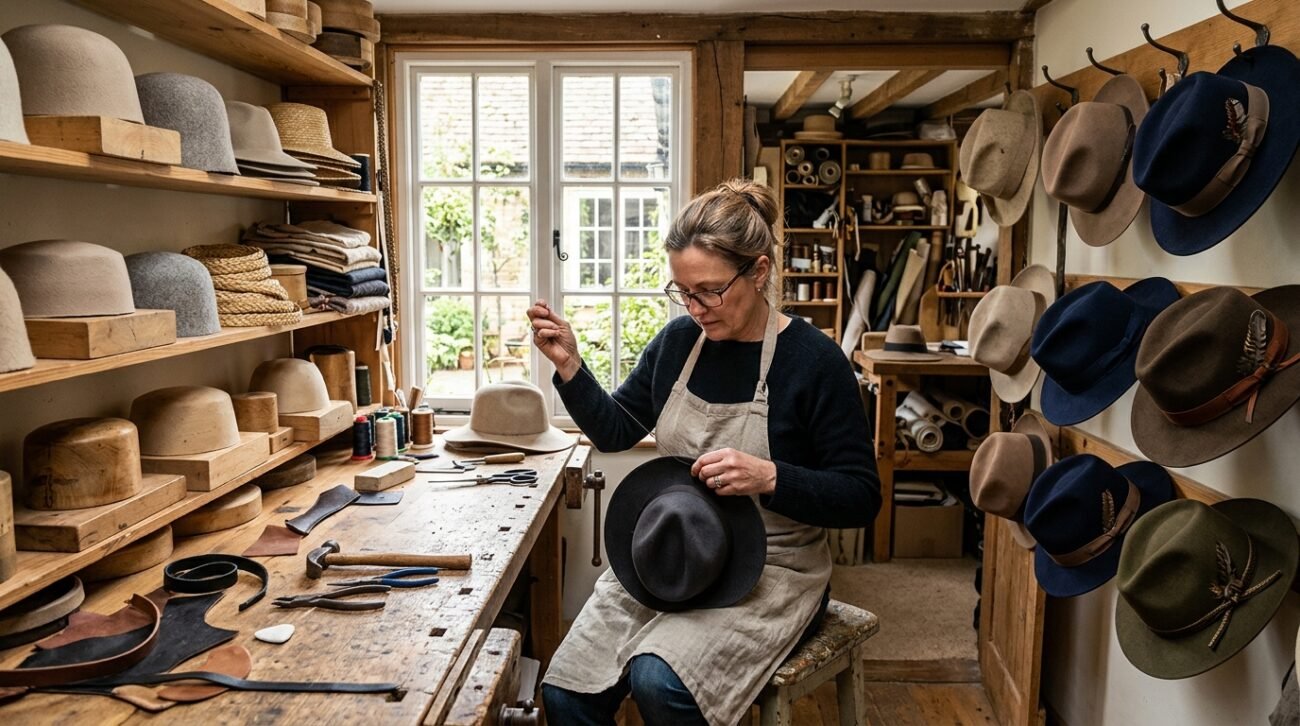
Most people look at a finished piece and see the result. They do not see the hours behind it. The decisions made and unmade. The materials were handled until they behaved the way they were supposed to. A dark masterpiece does not start dark — it starts as something ordinary. What happens between those two points is where the real story is.
It Starts With Choosing the Right Base

Not every hat can become something. The shape, the material, the weight — all of it matters before a single tool touches it. Artisans who work in this space know within minutes whether a hat has potential or not. The base is not just a starting point. It is the foundation on which everything else is built. Get it wrong and nothing that comes after it saves the piece.
The Distressing Comes First
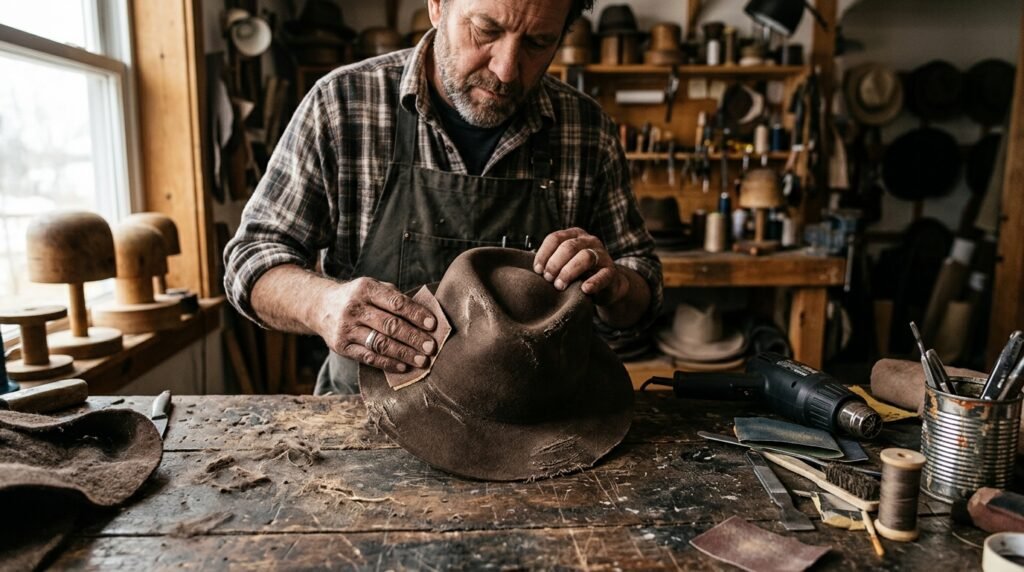
Before anything is added — things are taken away. Sanding, burning, pulling at the material until it stops looking new. That deliberate aging is not damage. It is the first layer of character. A hat that looks like it has lived through something hits differently than one that looks like it just came off a shelf. The darkness starts here — in the controlled destruction of what it was.
Every Material Has Its Own Rules

Leather behaves differently from felt. Felt behaves differently from straw. Artisans who work across materials spend years learning how each one responds — to heat, to pressure, to dye, to time. There are no shortcuts in that process. The material either cooperates or it does not. Knowing the difference — and knowing how to push it without breaking it — is what separates craft from accident.
The Skull Work Is Never Rushed
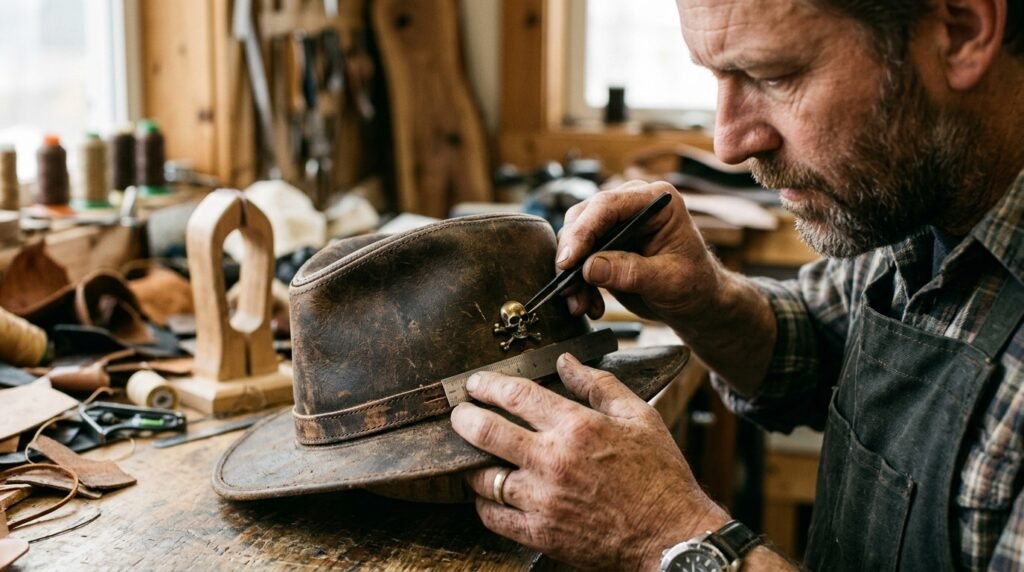
This is the part that defines a piece. Skull placement, sizing, the way it sits on the brim or the crown — every decision changes the whole feel of the hat. It’s too centered, and it looks designed. Off by an inch the right way and it looks fine. That instinct for placement is not taught in a class. It develops over hundreds of pieces and just as many mistakes.
Paint and Dye Go On in Layers

One coat does nothing. Real depth — the kind that makes a dark hat look like it came from somewhere specific — comes from building slowly. Layer over layer, each one dry before the next goes on. Some artisans work the same section for hours. Not because it is not finished — because it is almost finished, and almost is not good enough.
Hardware Changes Everything
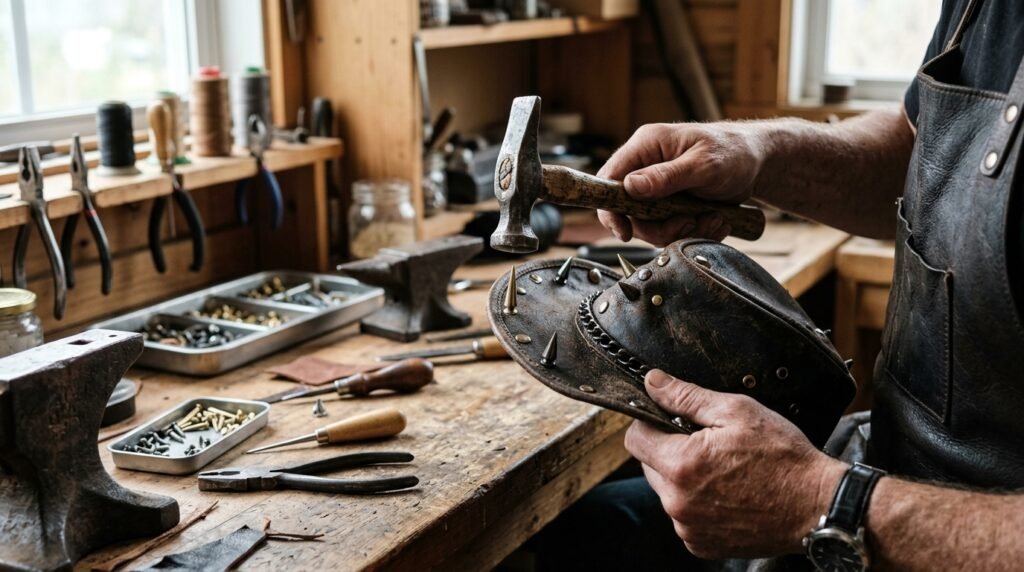
A single metal piece in the right place does more than decoration. It anchors the whole aesthetic. Spikes, rivets, chains, custom cast pieces — the hardware is not an afterthought. It is a decision made early and built toward. The wrong piece in the wrong place pulls everything apart. The right one makes the whole hat make sense.
No Two Come Out the Same
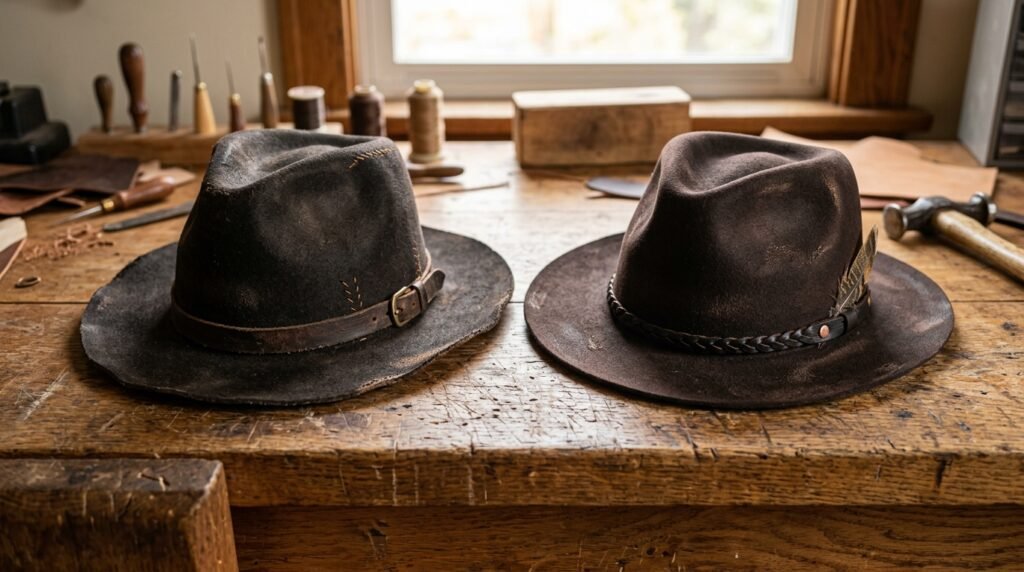
This is what machines cannot replicate. Every hand that works a piece brings something different to it. Different pressure, different instinct, different eye for what the material is asking for. Two artisans working the same base with the same materials will produce two completely different results. That unpredictability is not a flaw in the process. It is the whole point of it.
The Finished Piece Holds the Hours
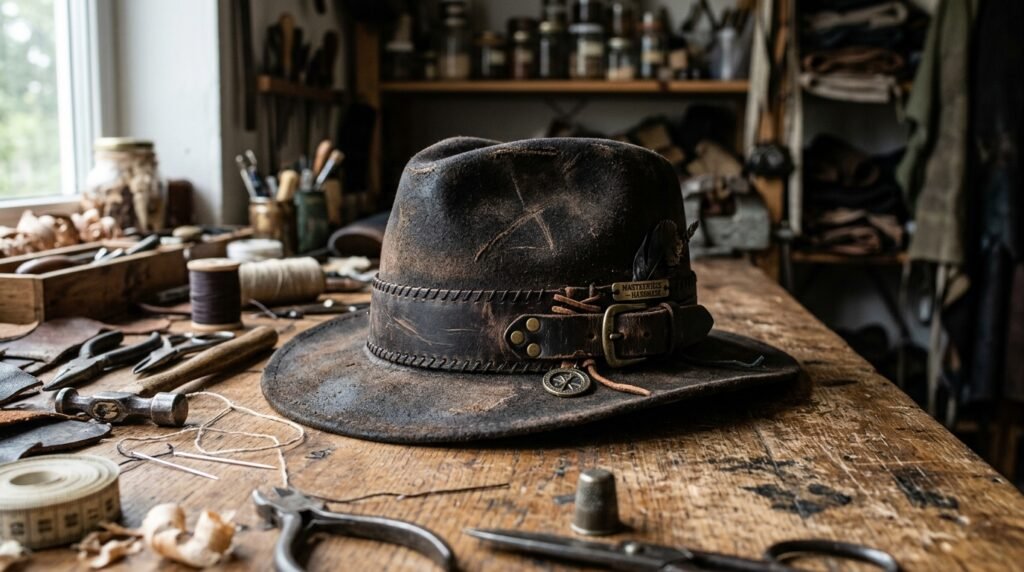
Pick up a handcrafted dark hat and something registers — even before you can name what it is. The weight of it. The texture. The way no single detail looks accidental. That feeling is the hours made physical. It does not come from a factory. It does not come from a template. It comes from someone who cared enough to stay with the thing until it became what it was always supposed to be.
