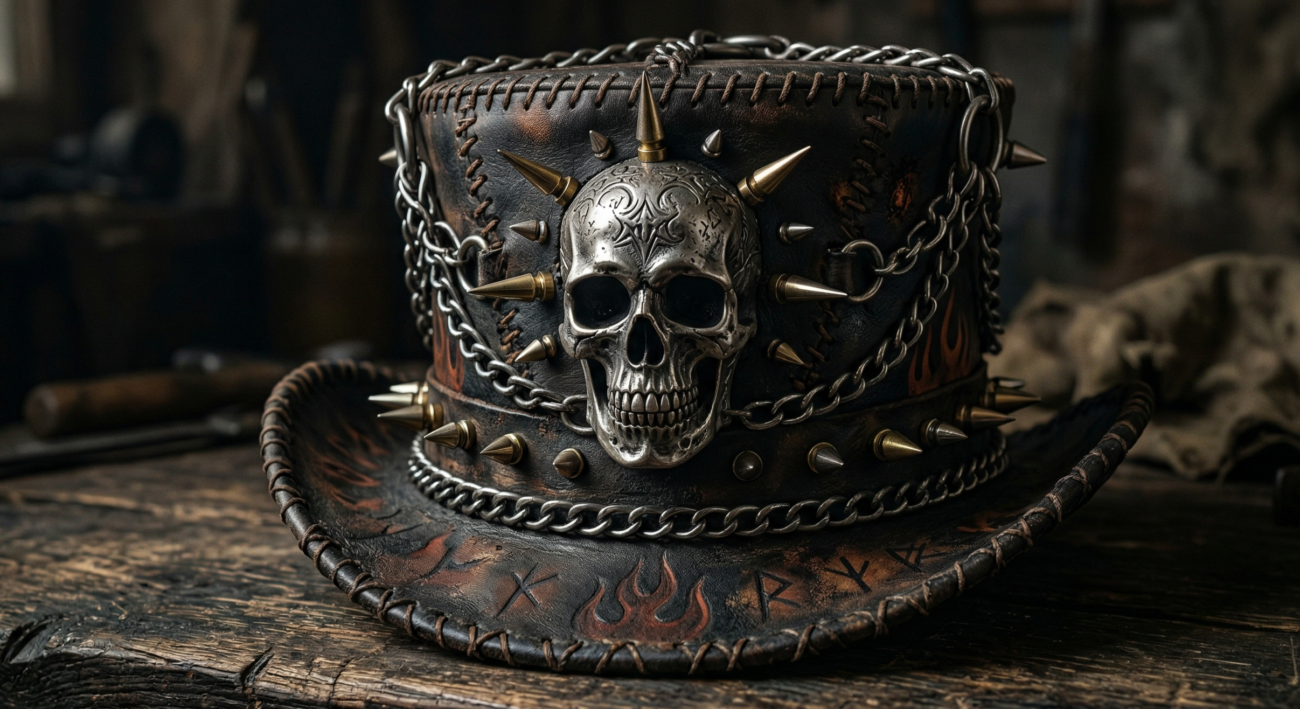
Most hats exist to cover a head. These do not. The end of rock headwear was never designed for practicality or mass appeal – it was designed to say something. Something loud, something dark, something that makes people look twice and either deeply respect what they are seeing or want nothing to do with it. That reaction – the division it creates – is exactly the point.
The Full Skull Crown
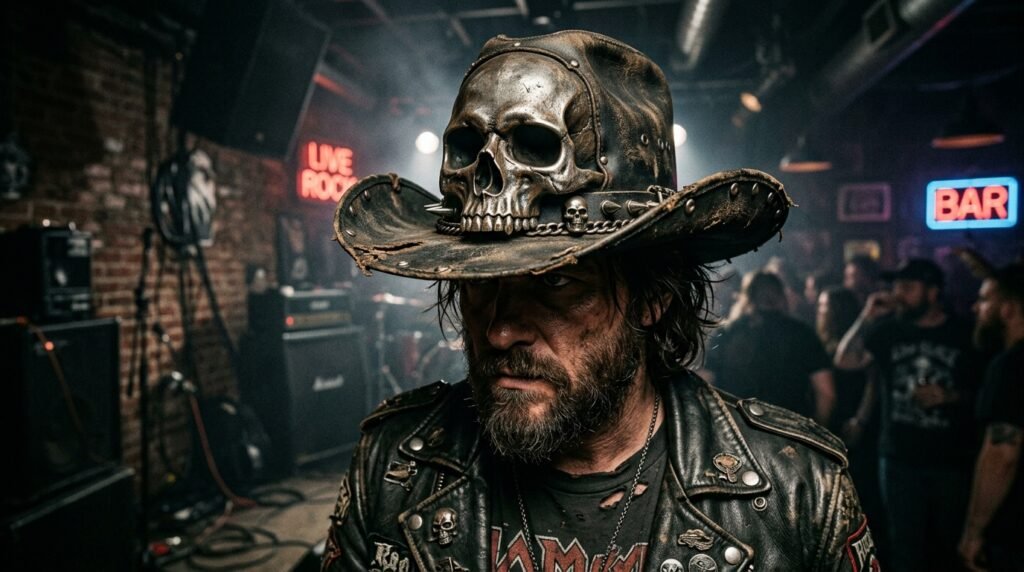
Not a small skull detail tucked into a corner. A full skull built into the crown of the hat – eye sockets, teeth, bone structure – shaped from metal or resin and integrated so completely that it looks like the hat grew around it. The kind of piece that does not get worn to blend in. It gets worn to end conversations about blending in permanently.
Spike Architecture
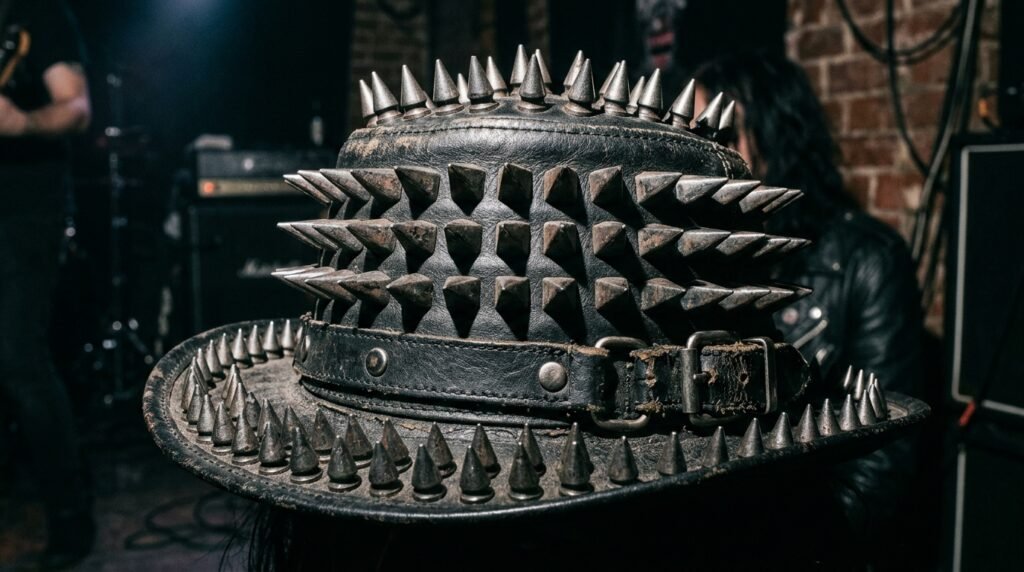
Spikes have always lived in rock culture. On jackets, on boots, on wristbands. But the hats that pushed things furthest took spike placement seriously – not scattered randomly but arranged with actual intention. Rising from the brim in formations. Running the crown in rows. Built from solid metal and placed so the whole silhouette reads as something between headwear and armor.
Burned and Charred Finishes
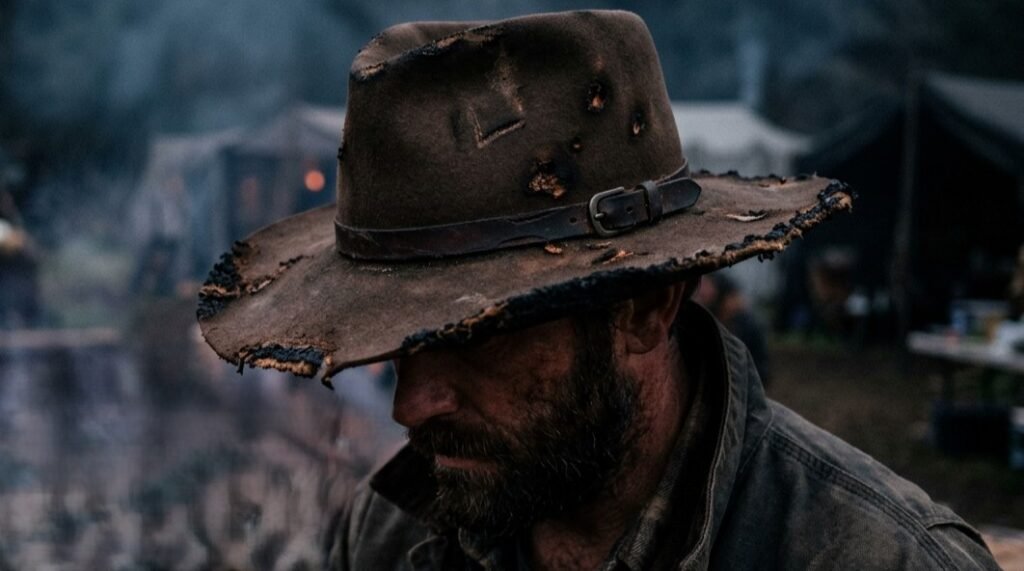
Some of the most extreme designs never added anything – they destroyed instead. Hats taken to open flame, burned deliberately, then worked back into something wearable. The char marks left behind are not damaged. They are the design. A piece that looks like it survived something hits differently than one that just looks dark. This finish cannot be replicated in a factory. It has to be earned.
Full Leather Wrapping With Exposed Stitching
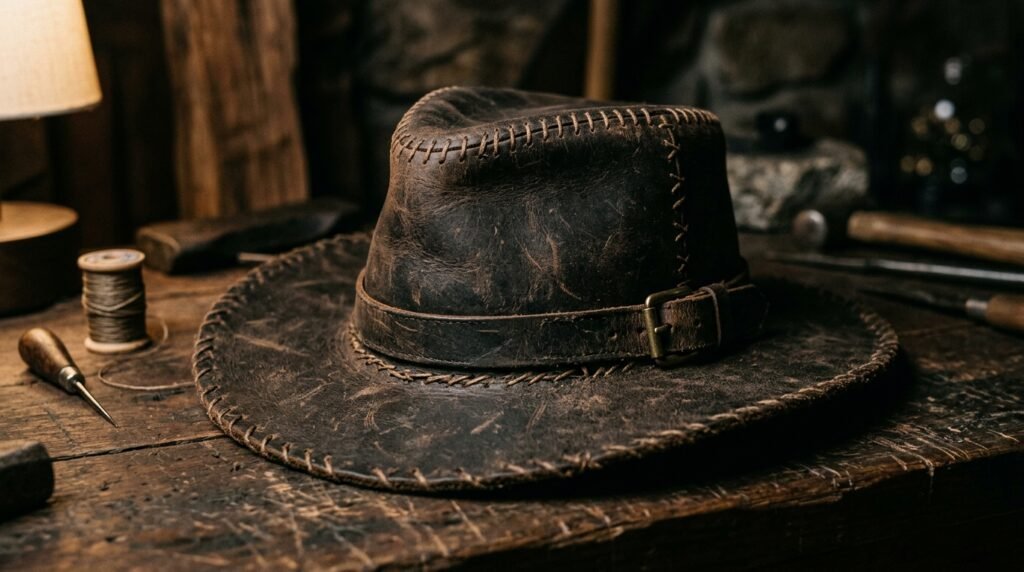
Heavy leather wrapped so tightly that the original hat underneath almost disappears. Stitching left exposed on purpose – thick, uneven, visible from a distance. The rawness is deliberate. A finished edge would ruin it. The exposed construction is what makes it look like something built rather than manufactured. That distinction is everything in a culture that can always tell the difference.
Chains as Structure

Not chains as decoration hanging from a brim. Chains used structurally – woven through the hat itself, creating sections, connecting hardware pieces, forming patterns that only reveal themselves when the hat moves. The weight of the real chain changes how the piece sits and shifts. That movement is part of the design. Static accessories do not belong in this category.
Taxidermy and Bone Elements

The furthest edge of extreme rock headwear has always included the organic. Animal bones, feathers worked into dark arrangements, elements that reference something older and less comfortable than modern fashion usually allows. These pieces are not for stages or streets – they are for the people who see headwear as a statement about who they are at a level most people never go.
Hand Painted Imagery
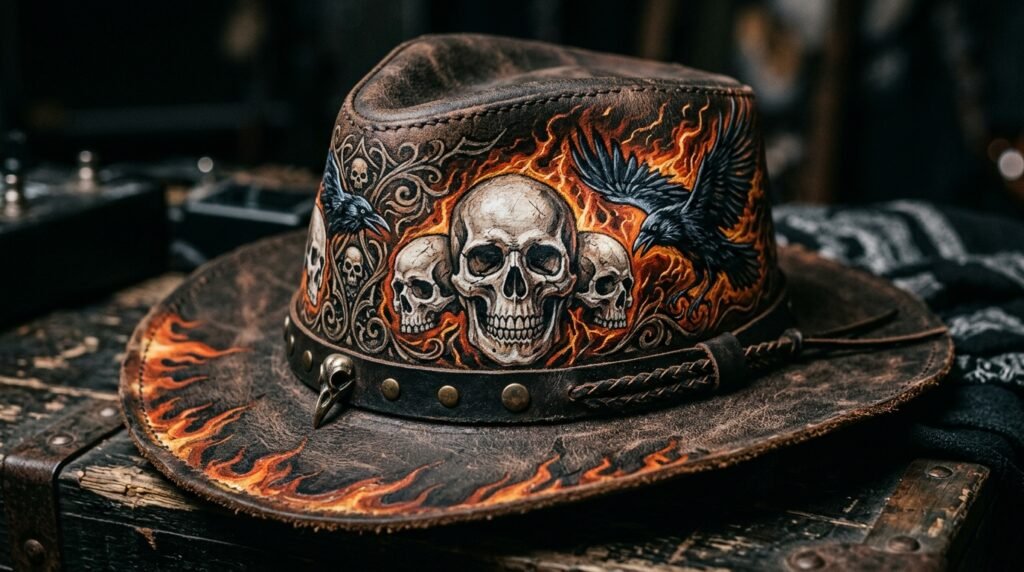
Some extreme designs skipped hardware entirely and went straight to the surface. Hand-painted imagery – skulls, ravens, flames, symbols – applied directly to the hat with the kind of detail that takes hours per piece. No two ever look the same. The painting becomes the hat. Remove it and there is nothing left worth wearing.
The Ones That Cannot Be Described
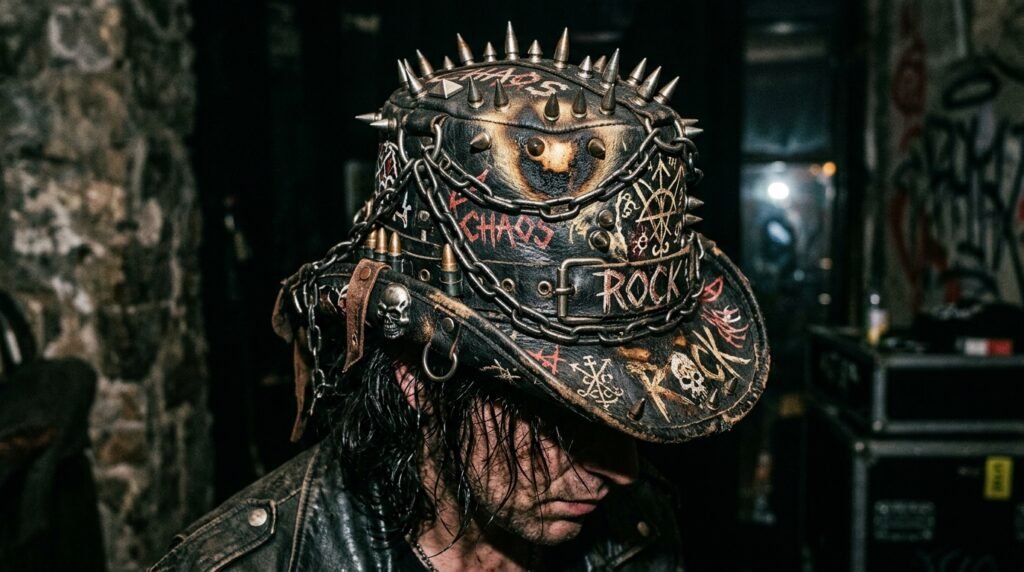
The most extreme pieces resist categorisation. They pull from multiple directions – leather and metal and paint and age and fire – and land somewhere that has no name yet. These are the hats that get photographed at shows, passed around online, talked about without the person who made them ever being mentioned. The work speaks before anything else does. That is the point. That has always been the point.
